


PureVPN is the redemption arc of this whole lineup, and how you feel about it depends on whether you believe a company can earn back trust it once threw away. In 2017 it handed a user’s connection records to investigators while advertising a strict no-logs policy, which is close to the worst thing a privacy company can do. What it did next is the part that interests me: it tore up its logging, moved jurisdictions, and signed itself up for a continuous, always-on audit that almost no rival will match. My rating: 4.1 out of 5.
The quick read: PureVPN in 2026 is a genuinely improved provider with strong streaming, a large network, and a no-logs policy that KPMG now checks on an ongoing basis rather than once a year. The 2017 history is both the reason to be cautious and, oddly, the reason its present transparency is more convincing than most. If you can weigh the past against the present, it has built a real case for a second look, and this review is that case with the warts left in.
31-day money-back guarantee, cancel anytime.
Table of Contents
PureVPN at a glance
What it gets right:
- A no-logs policy under a rare always-on KPMG audit, checked continuously rather than in a single annual snapshot.
- A move to the privacy-friendly British Virgin Islands, away from its old base.
- A large network with strong, dependable streaming across most major services.
- Modern protocols plus quantum-resistant encryption keys, forward-thinking for a mid-priced provider.
- A 31-day money-back guarantee, a day longer than the usual 30, and 10 simultaneous devices.
What I would change:
- The 2017 logging incident is the reason it had to rebuild trust at all, and some buyers will never get past it.
- Speeds have improved but still trail the top providers on long routes.
- It does not reliably unblock HBO’s Max, if that catalog matters to you.
- Gaming is not its strong suit.
The 2017 incident, and what changed
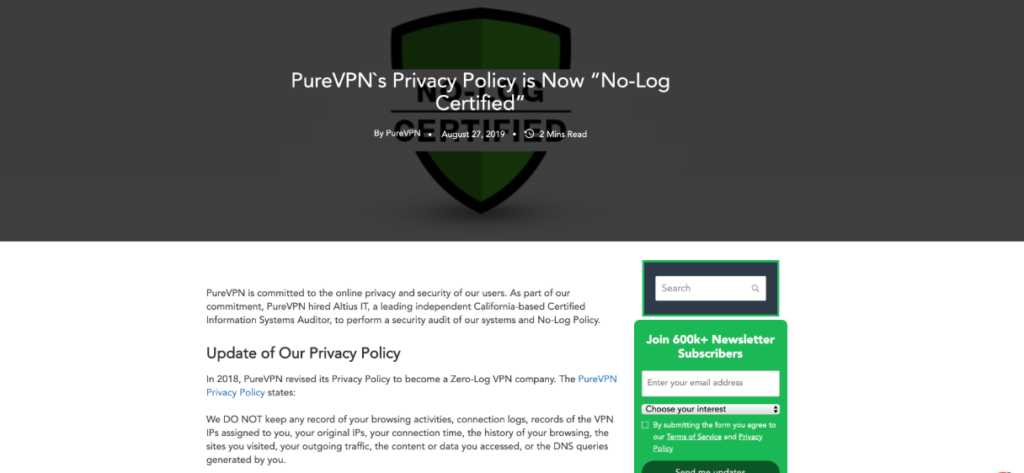
This is the part you came to read, so I will not bury it under feature talk. In 2017, PureVPN provided user connection logs to United States investigators in a criminal case, despite its marketing claiming at the time that it kept none. The contradiction was serious and entirely fair to hold against the company, and plenty of people drew a permanent line under it right there, which is a defensible call. A privacy tool that turns out to be keeping the very records it swore it did not has broken the one promise that matters.
The reason PureVPN is still on my list is what came after. It overhauled how it handles logs, relocated its headquarters from Hong Kong to the British Virgin Islands, which has stronger privacy protections and no data-retention regime, and then did the unusual thing: it committed to an always-on audit by KPMG, one of the big-four accounting firms. That last point is the one that genuinely changes the calculation. Most VPNs get audited once, publish a triumphant press release, and you are left trusting that nothing slipped in the years since. PureVPN’s no-logs policy is instead verified on a continuous basis, so the check is a standing arrangement rather than a single photograph that ages the moment it is taken.
There is a strange logic to it that I have come around to. A company that failed in public, lost the argument, and then submitted itself to permanent outside scrutiny is, in a real sense, more accountable than one that has simply never been tested. The 2017 PureVPN made a promise and broke it; the 2026 PureVPN has arranged for someone else to keep checking whether it is telling the truth. That does not erase the history, and you are right to factor the history in, but it does mean the current claim rests on something sturdier than the original one ever did. I weigh that context in my best VPNs for privacy guide too.
How I weigh a VPN that has slipped
A provider with a logging incident in its past is a harder thing to judge than a clean newcomer, so it is worth being explicit about how I do it. The lazy options are both wrong. Writing PureVPN off forever treats trust as a thing that can only be spent once, which is not how anything else in life works; and waving the incident away as ancient history asks you to forget the exact failure that makes a VPN worth scrutinising at all. Neither does the user any good. The useful question is narrower: has the company changed the specific conditions that produced the failure, and can an outsider confirm it?
On that test PureVPN scores unusually well. The 2017 problem was that it held data it claimed not to and handed it over under legal pressure. The response addressed both halves: it changed what it retains, moved to a jurisdiction that does not compel retention, and brought in a continuous outside auditor to keep checking the claim. That is the difference between a company saying sorry and a company rebuilding the machine that broke. I still go in with my eyes open, because trust earned back is not the same as trust never lost, but a provider that has been tested, failed, and visibly re-engineered itself is a more known quantity than one whose promises have simply never been put under real strain.
Who PureVPN is for
PureVPN suits a particular user. The natural fit is someone who wants strong streaming and a big network at a fair price, and who is reassured rather than repelled by a company that failed openly and then rebuilt under continuous audit. If you read the story above and your takeaway is that a tested-and-corrected provider is more trustworthy than an untested one, PureVPN is squarely aimed at you, and the price makes it an easy thing to try.
It is the wrong pick for two groups, and I would not push it on either. The first is anyone who cannot get past the 2017 incident on principle, which is a completely valid position and not one I will argue you out of; trust, once broken, is allowed to stay broken. The second is the speed obsessive or the competitive gamer who needs the fastest long-distance performance going, because that is not where PureVPN lives. For the redemption-curious streamer on a budget, though, it makes a stronger case than its reputation might lead you to expect.
To put a face on it, the user I would most comfortably point here is someone who has done a little homework, knows about the 2017 story, and has decided that a company audited continuously by KPMG is a safer bet than one whose untested promise just happens to have held so far. They want a big network and reliable streaming, they do not want to pay premium money for it, and they find the redemption narrative genuinely reassuring rather than a red flag. For that person PureVPN is not a compromise pick at all; it is a deliberate one, chosen precisely because the company has more to prove and has visibly set about proving it.
Streaming is a real strength

Whatever its past, PureVPN is good at streaming in the present, and that is not a small thing for a provider in this price range. Across its network it has opened the services I watch without fuss, and independent testing backs it up: testers got it into Netflix, Disney+, Hulu, Peacock, Amazon Prime Video, ITVX, and BBC iPlayer, which is a wider spread than a lot of pricier names manage. Netflix in particular has been dependable for me across regions, and the dedicated streaming options take the guesswork out of which server to pick.
There is one exception worth flagging before you buy on the streaming strength. The same testing found PureVPN does not reliably unblock HBO’s Max, so if that catalog is central to your watching, factor it in or look at a provider that handles it. Everything else on the usual list, though, has been solid, and PureVPN earns its place on my best VPNs for streaming list on that breadth. For a service better known for its history than its present, the streaming is the feature most likely to win you over once you use it.
A little more on how the services behave, since they are not all equal. Netflix is the toughest gatekeeper and the one PureVPN handles most impressively, opening regional libraries cleanly enough that I rarely think about it. BBC iPlayer, which blocks aggressively, has been dependable on the UK servers, and Disney+, Hulu, Peacock, ITVX, and Prime Video have all come up without much fuss. Max is the lone hold-out, the service that has refused to cooperate consistently, so HBO’s catalog is the one thing I would not buy PureVPN specifically to watch. The practical habit, as with any streaming VPN, is to use a dedicated streaming server and, if a title will not load, switch to another in the same country before giving up; it is almost always one tired server rather than the whole service.
Speed and gaming
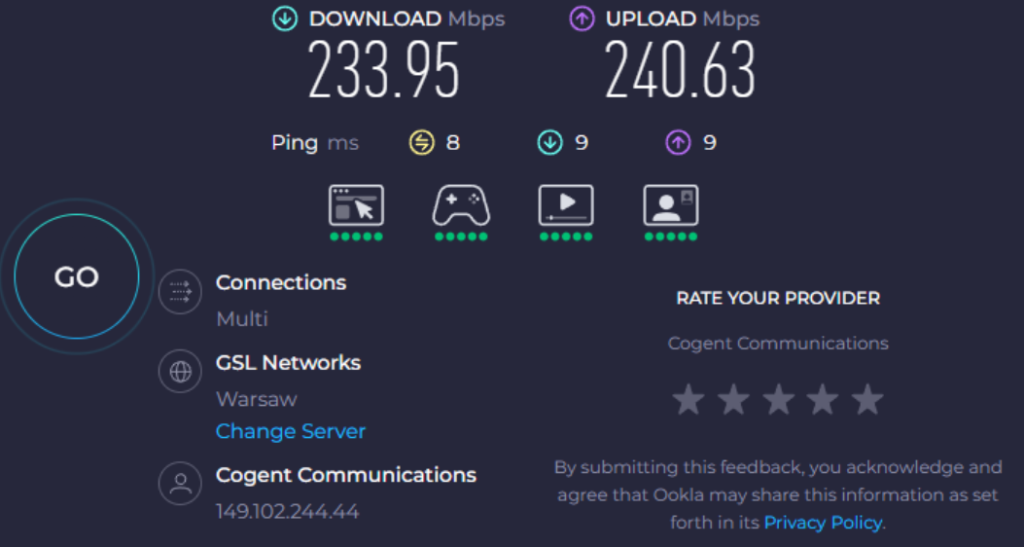
Speed is the area where PureVPN has improved the most over the years, and also the one where it still has ground to make up. On a nearby server it is quick: independent testing on a local connection held close to the full line speed, and in everyday use streaming, calls, and downloads all feel normal, with WireGuard doing the heavy lifting. The qualifier is distance and consistency. Push the connection across continents and PureVPN sheds more than the top names do on the same route, and the testers’ verdict, improved but still lagging the fastest VPNs, matches what I see. It is good rather than great, and good is plenty for most uses.
Gaming is the softer spot, and I will not oversell it. Latency on a nearby server is fine for casual online play, but it is not built for the competitive sessions where every millisecond counts, and a faraway game server will feel the distance penalty. If gaming is a primary reason you want a VPN, this is not the one I would steer you to. For streaming, browsing, and the ordinary business of staying private online, the speed is more than adequate; for esports, look elsewhere. Setting expectations correctly is half of being happy with a mid-priced VPN, and PureVPN is a streaming-and-privacy tool first.
PureVPN abroad
The streaming strength turns into a travel strength the moment you leave home, which is where I have leaned on PureVPN most. The point of a streaming VPN on the road is to make the catalog you pay for follow you, and PureVPN has done that for me reliably: dropping onto a home-country server and finding Netflix, iPlayer, or Prime behaving as if I had never moved. Working out of a long stay in Medellín, the British and US services I wanted came up without the fight that lesser providers put up, and the 10 connections meant the laptop, the phone, and a travel tablet were all covered without juggling logins.
The censorship picture is more encouraging here than for most of the lineup. Where a lot of providers simply fail behind heavy filtering, PureVPN states that it works in China and independent testing has reflected that, so for the traveler headed somewhere genuinely restrictive it is at least a candidate rather than an automatic no. I would still confirm it from home before depending on it, because nobody can promise the firewall, but having a real chance is more than most rivals offer. For the ordinary trip, the hotels and cafes of normal countries, it simply connects and keeps your home services working, which is the whole job.
Security, encryption, and quantum-resistant keys
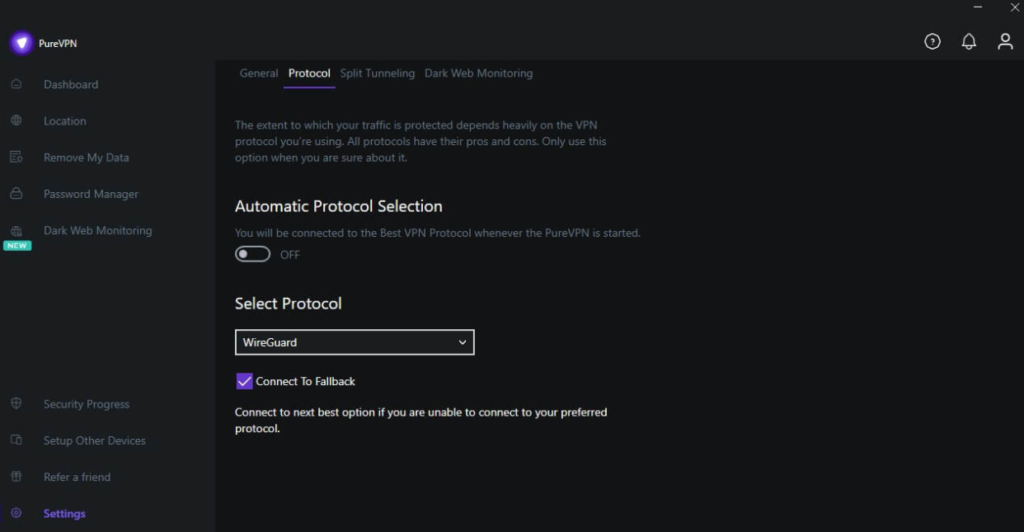
On the technical side PureVPN is in good shape, and in one respect ahead of its price bracket. It encrypts with AES-256, runs WireGuard, OpenVPN, and IKEv2, and includes a kill switch that cuts your traffic if the tunnel breaks so your real address cannot leak in the lapse. Independent leak testing turns up nothing on the DNS, IPv6, or WebRTC fronts, which matches my own checks, and split tunneling is on hand for routing chosen apps outside the VPN when you need to.
The forward-looking touch is quantum-resistant encryption keys, which PureVPN has rolled into its setup. The short version is that they are designed to stay secure against the kind of future quantum computers that could, in theory, unpick today’s encryption down the line. It is the sort of forward-looking touch the premium names tend to add first and the budget tier usually skips, and while you will not notice it day to day, it signals a company investing in the long game rather than coasting. Paired with the modern protocols and the clean leak results, the security here is genuinely solid, which matters all the more for a provider asking you to trust it again.
The leak testing deserves a sentence more, because it is the unglamorous check that protects you. The weak points a VPN must close are the narrow seams where a DNS lookup, an IPv6 address, or a WebRTC query can escape the encrypted tunnel and give you away. Independent testing has found none of those leaking on PureVPN, across DNS, IPv6, and WebRTC alike, and my own checks agree. It is the sort of result that should be table stakes but often is not, and for a company rebuilding its credibility, passing the boring tests cleanly is arguably more reassuring than any flashy feature, because it is the boring tests that the 2017 version effectively failed.
How the always-on audit work
Because the audit is the heart of PureVPN’s comeback, it is worth understanding what makes it different rather than taking the phrase on faith. A typical VPN audit is a point-in-time exercise: an outside firm examines the systems on a given date, signs off, and the report is accurate to that moment and slowly less so afterward. PureVPN’s arrangement with KPMG is structured as an always-on or continuous engagement, meaning the auditor can verify the no-logs claim on an ongoing basis rather than once and done. It passed a second KPMG evaluation under this model and has continued to publish that its policy is independently verified as no-log.
No audit is a magic guarantee, and I would not tell you otherwise; an auditor checks what it is given access to, and a determined bad actor can hide things from anyone. But a standing, repeated check from a big-four firm is a far stronger signal than a lone snapshot, and it is exactly the kind of structure you would want a company with PureVPN’s history to adopt. The British Virgin Islands base reinforces it, since the territory imposes no rule forcing the company to keep your records at all. Put the two together and you have a provider whose privacy claim, today, is among the more rigorously checked in the field, which is not a sentence I could have written about the 2017 version.
Server network and restrictive countries
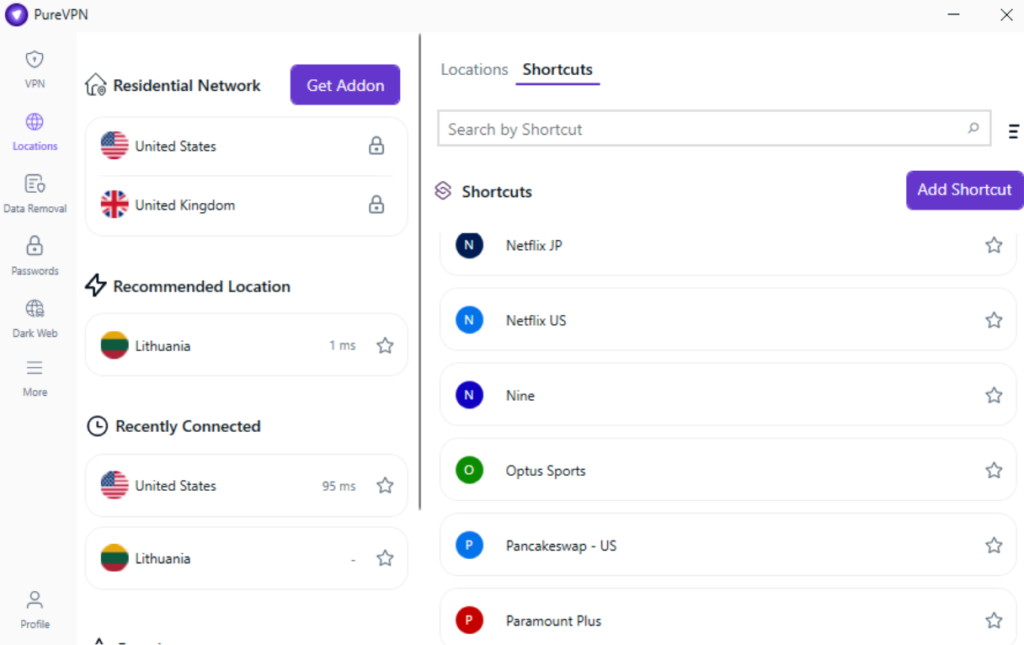
PureVPN runs a sizable network, with the company citing more than 6,000 servers across 65-plus countries, broad enough that I can always find a nearby option and a believable distant one. That breadth is part of why the streaming holds up, since there are plenty of servers to rotate through as platforms block old ones, and it means a faraway location is rarely unavailable when you need it. The network is not the very largest in the field, but it is comfortably big enough that you will not feel boxed in.
On heavy censorship, PureVPN does better than much of this lineup. The company states that it works inside China, and testing reflects that claim, which is a bar most providers fail outright. I would still treat any China connection as something to set up and confirm from home before you rely on it, since conditions there shift without warning and no provider can promise the firewall, but a working claim backed by independent testing is more than most rivals can offer. On the everyday filtered networks most travelers encounter, the locked-down offices and hotel sign-in pages, it connects without complaint.
Torrenting and P2P
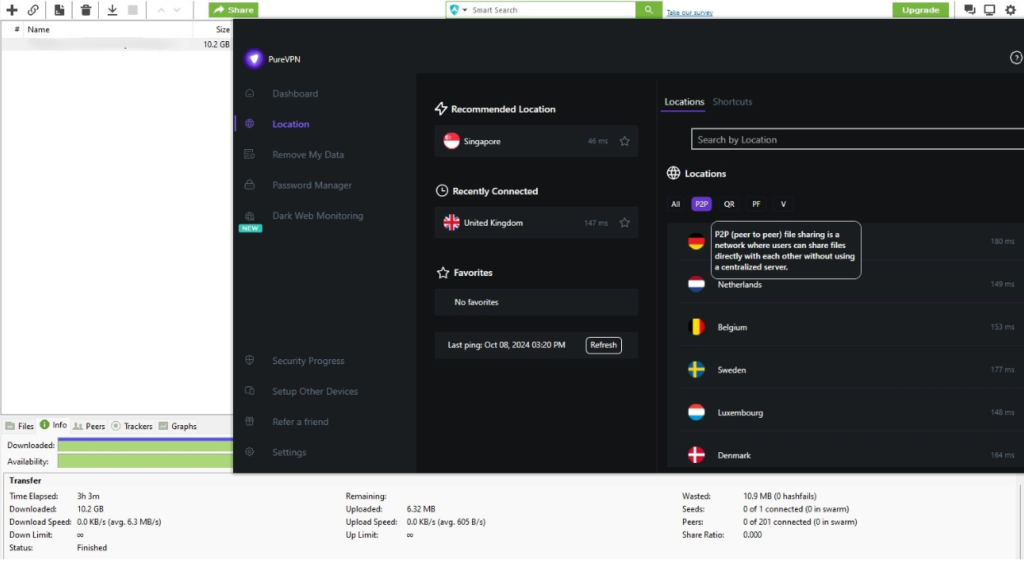
Torrenting is well supported, with P2P-optimized servers for the job and the kill switch standing guard so your real address never slips into the swarm if the tunnel drops. The British Virgin Islands base helps here too, since there is no data-retention law hanging over the activity, and combined with the audited no-logs policy it makes a reasonable choice for downloaders. Speeds on P2P are solid on nearby servers, if not the very fastest over long distances, and split tunneling lets you keep your torrent client on the VPN while other apps use your normal connection. For the moderate downloader it does everything asked of it; only the heaviest users chasing maximum throughput on every route will find the edges, and they are well served by a faster specialist.
The privacy story matters more than usual for torrenting, and this is where PureVPN’s rebuild pays off in a concrete way. Downloading is exactly the activity where a no-logs claim has to be real rather than decorative, since it is the kind of traffic that draws legal attention, and a continuously audited policy plus a jurisdiction that does not force retention is a genuinely reassuring pairing to have behind you in the swarm. It is a neat irony that the company once burned by handing over records is now, on paper, one of the better-checked choices for the very activity where that matters most. I would still keep the kill switch on as a matter of habit, but the foundations under PureVPN’s torrenting are sounder than its history might lead you to assume.
The apps, devices, and support
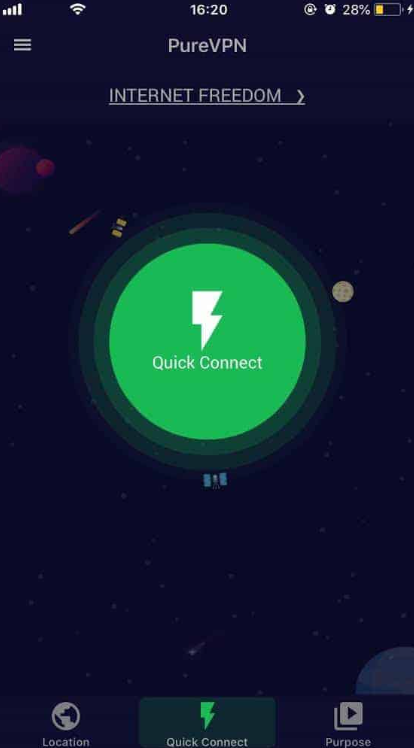
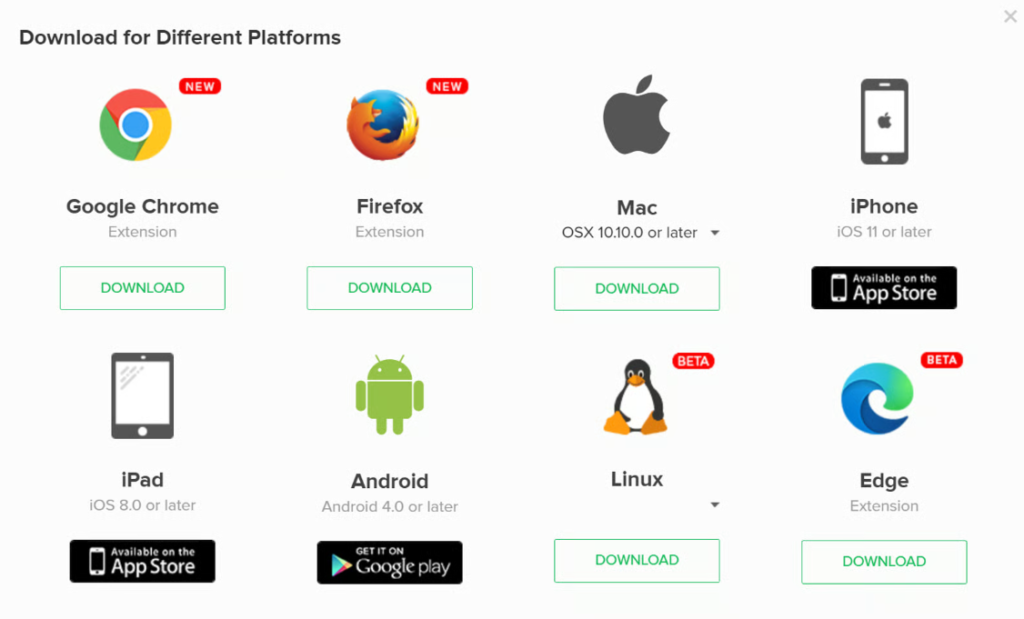
PureVPN’s apps cover Windows, macOS, iOS, Android, and the major browsers, and they have grown up considerably alongside the rest of the service. They are clean and straightforward to navigate, with the streaming and P2P options easy to find, and a single subscription stretches to 10 simultaneous devices, plenty for a household to keep every phone, laptop, and tablet protected together. Nothing about the apps will intimidate a newcomer, which has not always been true of PureVPN and is a welcome change.
Live chat is staffed around the clock, and its speed has improved markedly along with everything else, putting you in front of a real person who can fix a problem rather than read back a script. There is also a detailed help center for the questions you would rather solve yourself. The overall impression of the apps and support is of a company that has spent its rebuilding years on the unglamorous fundamentals as well as the headline audit, which is the right place to spend them. New to VPNs? My VPN setup guide runs through the essentials for each platform.
Setting up PureVPN
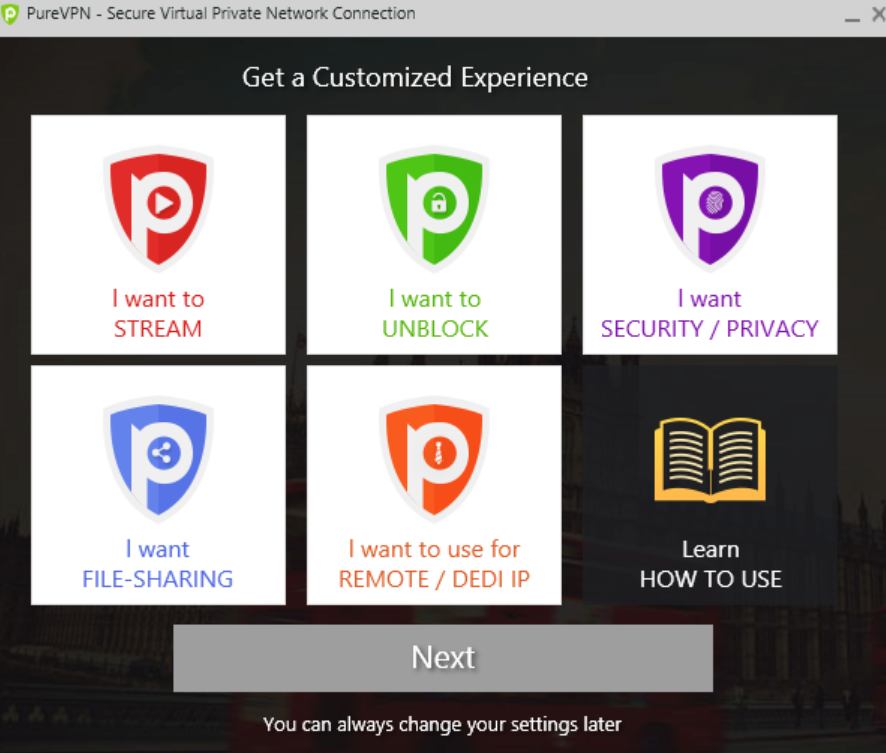
Getting started takes only a few minutes. Create an account, grab the app for whatever you are holding, log in, and hit connect; protection starts there. To fine-tune, the settings worth a look are the kill switch, which belongs on, and the protocol, where WireGuard is the right default for speed. For streaming, choose one of the dedicated streaming servers rather than a random spot; for downloading, pick a P2P server. A television or console with no app of its own is best handled by flashing PureVPN onto a compatible router, which then shields the whole house behind one connection. With ten device slots there is nothing to ration, so spread it across every gadget you own.
PureVPN pricing and plans
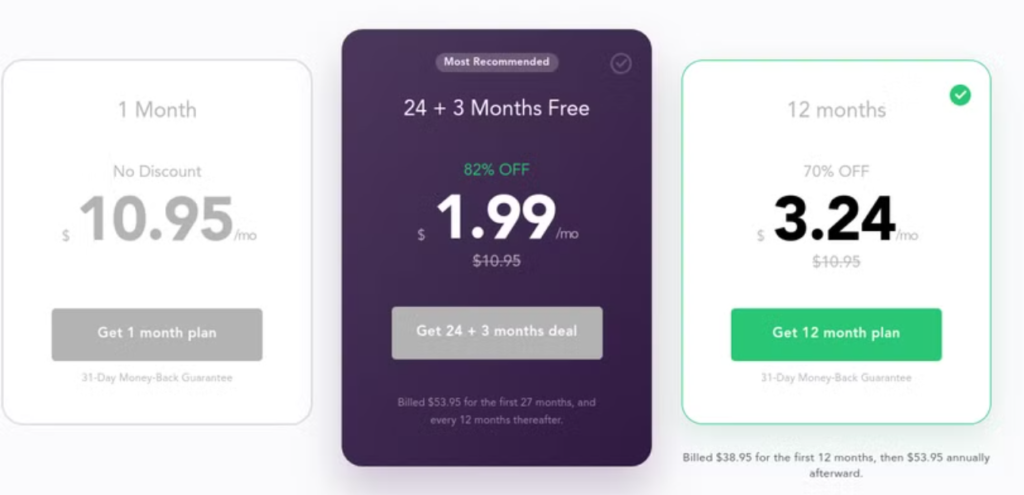
PureVPN is priced like the budget-to-midrange names, which is part of the appeal. The longest plan lands at around $2 a month, with shorter terms costing more and the monthly plan running to the usual premium near $13. A dedicated IP and a password manager are available as paid extras for anyone who wants them, while the core VPN on a long term stays inexpensive on its own. The money-back guarantee runs 31 days, a day longer than the industry-standard 30, which is a small but genuine point in its favor, and you can pay by card, PayPal, or cryptocurrency. For the network size and the streaming strength, the price is fair, and it lands on my cheapest VPNs list as a result.
| Key facts | PureVPN |
|---|---|
| Price | From about $2/mo (longest plan); ~$13 monthly |
| Money-back guarantee | 31 days |
| Simultaneous devices | 10 |
| Servers | 6,000+ in 65+ countries (company figure) |
| Jurisdiction | British Virgin Islands |
| Protocols | WireGuard, OpenVPN, IKEv2 |
| Encryption | AES-256, quantum-resistant keys |
| Logging | No-logs, always-on audit by KPMG |
| Streaming | Netflix, Disney+, Hulu, Peacock, Prime Video, iPlayer (not Max) |
| China | Works (company claim, test first) |
31-day money-back guarantee.
What is new for 2026
PureVPN has used the last couple of years to keep closing the gap with the names that never stumbled. The continuous KPMG audit has carried forward rather than lapsing into a one-off, which is the single most important thing for a provider in its position. On the technical side, the quantum-resistant encryption keys are the headline addition, a genuinely forward-looking move at this price, and WireGuard has settled in as the default to lift everyday speeds. The streaming side has stayed broad as the platforms tighten their blocks, and the apps and live chat have both had steady polish that makes the service feel far less rough than its old reputation suggests. None of it undoes the history, but taken together it is the picture of a company still actively working to be better rather than resting on the rebuild it has already done.
How PureVPN compares
Against the names that never stumbled, the comparison is really about how you weigh history. NordVPN and Surfshark are faster and carry no equivalent scandal, so if a clean record is what you want, they are the safer buys at a similar price. ProtonVPN is the one to weigh if provable, never-broken privacy is your single priority, since it has the Swiss base and the unbroken audit history PureVPN cannot claim. What PureVPN offers that those do not is the specific, slightly counterintuitive appeal of a company that was caught, paid for it, and now submits to continuous outside checking. For a particular kind of buyer that is a more reassuring story than a record that has simply never been tested, and the price undercuts the premium names comfortably. The way to frame it against a clean-record rival is that you are trading a spotless history for a continuously checked present at a lower price; whether that is a good trade depends entirely on how much weight you put on the word “history” versus the word “checked,” and only you can set that.
Reliability and the honest limits
The drawbacks worth naming are clear and I have flagged them as we went. The 2017 incident is the obvious one, and for some users it is simply disqualifying, which I respect; no amount of subsequent auditing is obliged to win back trust that was genuinely broken. The distance speed is the practical limit, good nearby and merely fair on the long routes, so a constant intercontinental traveler will notice it. And the gap in Max support is a specific streaming miss that matters if HBO’s catalog is part of your routine.
What sits on the other side of the ledger is a genuinely rebuilt service: strong streaming, a large network, modern and forward-looking security, and a privacy claim checked more rigorously than most of the competition manages. The summary is that PureVPN is no longer the company that failed in 2017, and the evidence for that is unusually concrete, but you are entitled to decide the past still outweighs the present. A review can lay the facts side by side; only you can set the price you put on a broken promise that was later, demonstrably, mended.
PureVPN FAQ
Can PureVPN be trusted after the 2017 incident?
That is the right question to ask. In 2017 it provided user logs to investigators despite a no-logs claim. Since then it has rebuilt its policies, moved to the British Virgin Islands, and submitted to a continuous always-on audit by KPMG. The history is real, and so is the verified improvement; whether it is enough is a personal judgment only you can make.
Does PureVPN keep logs now?
It says no, and unusually that claim is verified on an ongoing basis rather than once. KPMG audits the no-logs policy under an always-on arrangement, which is stronger than the single annual check most providers rely on, and its British Virgin Islands home carries no rule forcing it to keep your data.
Is PureVPN good for streaming?
Yes. It reliably unblocks Netflix, Disney+, Hulu, Peacock, Amazon Prime Video, ITVX, and BBC iPlayer in independent testing. The one notable miss is HBO’s Max, which it does not consistently open, so weigh that if that catalog is important to you.
Does PureVPN work in China?
The company says it does, and independent testing reflects that claim, which puts it ahead of most rivals on this front. As with any provider, set it up and confirm it connects before you travel, since China’s filtering changes without warning and no VPN can guarantee access.
How many devices does PureVPN support?
Ten connections at once per account, enough for a household’s phones, laptops, and tablets. To go beyond that, set PureVPN up on a router and the whole network rides a single protected connection.
What are quantum-resistant encryption keys?
They are encryption keys designed to stay secure against future quantum computers, which could in theory break some of today’s encryption. PureVPN has built them into its setup, which is forward-thinking for a mid-priced provider, even if it is not something you will notice in daily use.
Is PureVPN good for gaming?
It is fine for casual online play on a nearby server, but it is not built for competitive gaming where latency is critical, and distant game servers will feel the speed penalty. If gaming is your main reason for a VPN, a faster provider is the better choice.
Is the PureVPN money-back guarantee really 31 days?
Yes, a day longer than the industry-standard 30, which gives you a full month plus to put it through real use. Buy a long plan, test the streaming and speeds that matter to you, and ask for your money back inside that month-plus if it falls short.
Why did PureVPN move to the British Virgin Islands?
The move from its former base was part of rebuilding trust after the 2017 incident. The British Virgin Islands has strong privacy protections and no data-retention law, so relocating there removed the legal pressure that can force a company to keep and hand over records, backing up the no-logs commitment with a friendlier jurisdiction.
Is PureVPN fast enough for everyday use?
Yes. On nearby servers it holds close to full speed, which is plenty for streaming in high definition, calls, and browsing. It loses more than the top names on long intercontinental routes, so heavy long-distance users will feel it, but for ordinary daily use it is more than quick enough.
Verdict: who should buy PureVPN
Buy PureVPN if you want strong streaming and a big network at a fair price, and you are reassured rather than put off by a company that failed publicly and then rebuilt under continuous audit. The always-on KPMG verification and the British Virgin Islands base are genuine strengths, the streaming is better than the reputation suggests, and the quantum-resistant keys hint at a provider thinking past the next quarter. For a redemption story with receipts, it makes its case.
Two groups should pass it by. The first is anyone who cannot get past the 2017 incident on principle, which is a fair line to hold, and the second is the speed chaser or competitive gamer who needs the fastest long-distance performance going. Those buyers are better served by NordVPN, Surfshark, or ProtonVPN, and preferring a provider with no scandal in its past is an entirely reasonable instinct. But if you judge a company by what it did after it was caught as much as by the failure itself, PureVPN has done more to earn back trust than almost any provider I can name, and you can see where it lands against the field on my best VPNs of 2026.
If the comeback convinces you, the long plan is the one to buy, and the 31-day guarantee gives you a full month and change to judge whether the present really does outweigh the past. Test the streaming you care about, push the speeds on the routes you use, and let the evidence rather than the old headline make the decision. A full month and change is long enough, with no money on the line, to find out for yourself whether the rebuilt PureVPN earns back the trust the 2017 version threw away, and that is a question best answered by your own weeks of real use rather than by anyone’s verdict from the outside, mine very much included.
31-day money-back guarantee, cancel anytime.
Leave a Reply
You must be logged in to post a comment.