


Most VPNs promise they keep no logs. A handful have been asked to prove it. Private Internet Access is one of the very few that has been hauled into a courtroom, ordered to produce user data, and come away empty-handed because there was nothing to produce. That is the strongest evidence a no-logs claim can have, stronger even than an audit, and it is why PIA holds a loyal following among the kind of people who actually read the privacy policy before they buy. My rating: 4.5 out of 5.
The quick read: PIA is a privacy powerhouse for people who like to tinker. It is cheap, endlessly configurable, covers unlimited devices, and has the courtroom receipts to back the no-logs claim that most providers only assert. The trade-offs are a United States base and an interface busier than the beginner-friendly names, but if you want control and proof rather than polish, very little touches it for the money, and the pages below lay out the whole case.
30-day money-back guarantee, cancel anytime.
Table of Contents
PIA at a glance
What it gets right:
- Court-tested privacy: a no-logs policy that produced nothing when a court demanded it, backed by independent audits.
- Fully open-source apps on every platform, so anyone can read the code instead of trusting a black box.
- Unlimited simultaneous connections on a single account.
- Deep, granular settings, including multi-hop, obfuscation, and port forwarding, for people who like to tinker.
- Among the lowest prices anywhere, near $2 a month on the long plan.
What I would change:
- A United States base inside the 14 Eyes alliance, which gives some privacy buyers pause.
- Owned by Kape Technologies, parent of ExpressVPN and CyberGhost as well.
- The desktop interface can feel busy if you do not want all the knobs.
- Streaming works but is funneled through dedicated servers rather than any location.
The privacy case, and the court record
This is where PIA earns its reputation, so it is worth slowing down on. Almost every no-logs claim in this industry is a matter of trust: the company says it keeps nothing, and you take its word. PIA’s claim has been put through something far rarer than trust. In actual legal proceedings the company was subpoenaed for user data and could not produce any, because it does not retain it, and that has happened more than once. A court order is the one test no provider asks for and the only one that cannot be stage-managed, which is exactly why it carries more weight than any planned audit.
And PIA has the audits too. Its no-logs policy has been independently verified, and unusually its apps are fully open-source on every platform, which means the code is there for any researcher to inspect rather than a black box you have to believe in. Between courtroom proof, outside audits, and open code, PIA offers three separate kinds of evidence where most providers offer one or none. For a category built almost entirely on promises, that stack of verification is genuinely unusual, and it is the single best reason to consider it.
It is worth being clear about why the courtroom test outranks even a good audit, because the distinction matters. An audit is something a company invites: it picks the firm, sets the scope, and chooses when to publish, all of which is fine and worth having, but it is a planned exam the subject helped design. A subpoena is the opposite. Nobody volunteers for it, nobody controls the timing, and the only thing that saves you is genuinely having nothing to hand over. When PIA was compelled to produce records and produced nothing, that was the no-logs policy working under real, adversarial pressure rather than in a rehearsed setting. It is the closest thing this industry has to a live-fire test, and very few providers have passed it because very few have been forced to take it.
Two caveats keep it from a clean sweep. PIA is based in the United States, a member of the 14 Eyes intelligence-sharing arrangement, and it is owned by Kape Technologies, the group that also owns ExpressVPN and CyberGhost. Both facts make some privacy buyers nervous, and I will not pretend otherwise. My own read is that a no-logs policy proven in court matters more than a postal code, because a company that holds nothing has nothing to surrender no matter who comes asking or where it is registered. Still, if jurisdiction is a hard line for you, a Swiss provider like ProtonVPN will sit easier, and it edges PIA on my best VPNs for privacy list. PIA is right behind it, and the gap is the jurisdiction rather than the substance.
Who PIA is for
PIA is a sharper fit for some buyers than others, and it pays to know which you are. The natural owner is the person who reads the manual, the one who wants to choose their encryption strength, route specific apps and even specific IP addresses in or out of the tunnel, and turn on obfuscation because they understand what it does. For that user the depth is the whole appeal, and the rock-bottom price on top of it makes PIA close to irresistible. Torrenters are a second strong fit, for reasons the torrenting section gets into.
The user who should think twice is the one who wants the simplest possible app and does not care about the settings underneath. PIA can be collapsed down to a single connect button, but its natural state is busier than a beginner-first service like CyberGhost, and if you want a Swiss base with no surveillance-alliance ties, this is not where you will find it. For control, proof, and value, though, PIA is hard to beat, and it is the VPN I would hand to a friend who enjoys poking at settings.
Picture the user I most often steer here: the privacy-minded value hunter who has read about the court cases and decided that proof beats marketing. They want to choose their own protocol, run port forwarding for their torrents, block ads at the network level, and cover every device in the house, and they want to spend as little as possible doing it. For that person PIA is almost purpose-built, and the low price turns what would be a careful decision elsewhere into an easy one. The redemption-curious aside, this is a VPN bought on purpose by people who know exactly what they are looking for, which is a different thing from a default everyone reaches for.
Features for people who like control
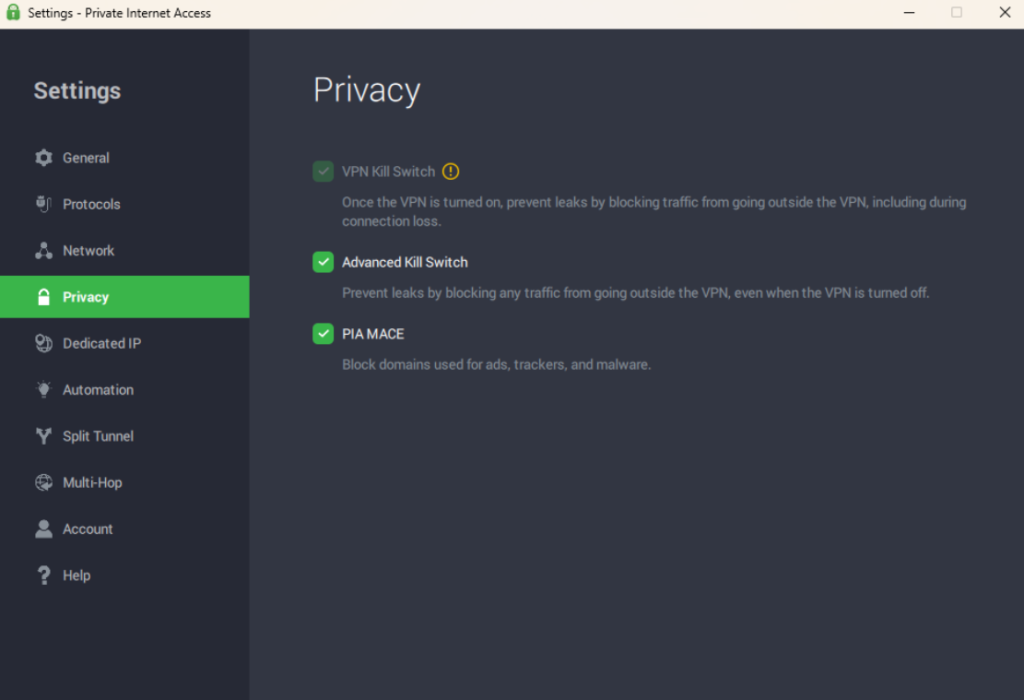
PIA hands you more dials than almost any other VPN, and that is the point rather than a flaw. The everyday standout is MACE, which kills ads, trackers, and malware domains at the DNS level, trimming the junk before it loads and lightening mobile browsing in the process. It lives right alongside the kill switch in the settings, on by default for anyone who wants it and off for anyone who does not.
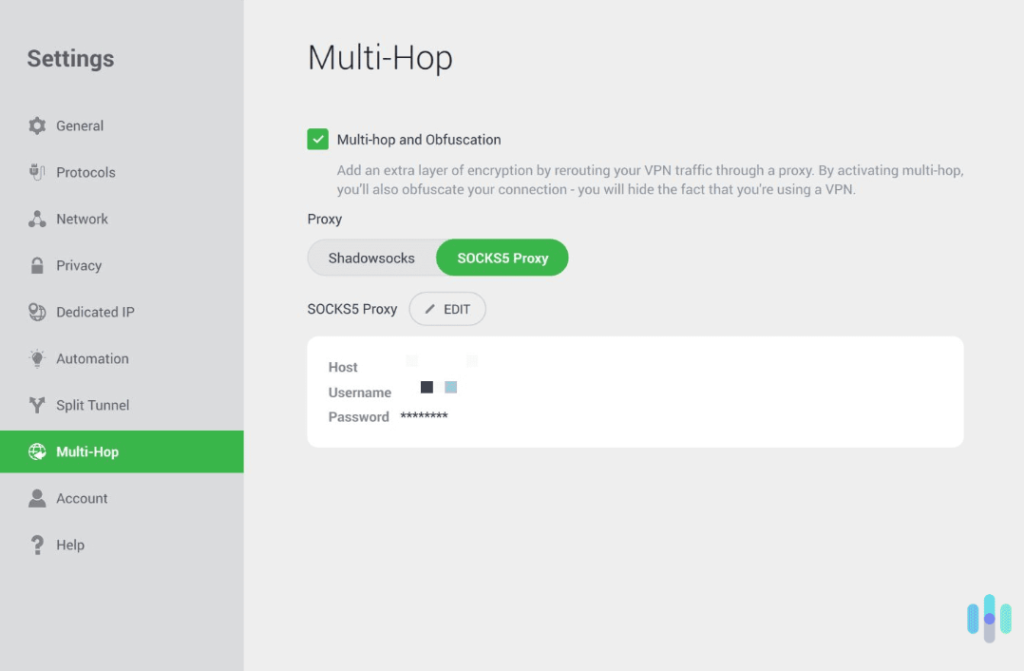
Past that, the toolkit runs deep. There is multi-hop for routing through two points, and obfuscation that includes Shadowsocks and a SOCKS5 proxy, which are genuinely useful for slipping past censorship in restrictive regions as well as for fine-tuning torrent connections. Port forwarding is on hand for better peer connectivity when you download, a feature plenty of bigger names drop. And the split tunneling is properly advanced, letting you route not just individual apps but specific IP addresses in or out of the VPN, which is the kind of control a power user reaches for. You can pick your encryption strength and adjust the protocol settings if you know what you are doing.
None of it is mandatory, and that is the saving grace. If you never open the settings, PIA still works on a single tap with sensible defaults. But if you are the sort of person who reads the documentation for fun, you will get more out of this app than out of the simplified ones, because it was clearly built by people who assume you might want to look under the hood. Few VPNs respect a tinkerer the way PIA does.
A concrete example brings it to life. On one machine I have PIA set to route only my torrent client and a single backup tool through the VPN by IP, leave everything else on the normal connection, run MACE to strip ads system-wide, and use a SOCKS5 proxy for the download client specifically. That is four distinct controls working together, and on most VPNs at least two of them simply would not exist. None of it is necessary, and a casual user would touch none of it, but the fact that it is all there, on a service costing two dollars a month, is the whole argument for PIA in a single setup. It is a toolbox priced like a toy, and for the person who opens the toolbox, nothing else in the lineup competes on that combination of depth and price.
Speed and security
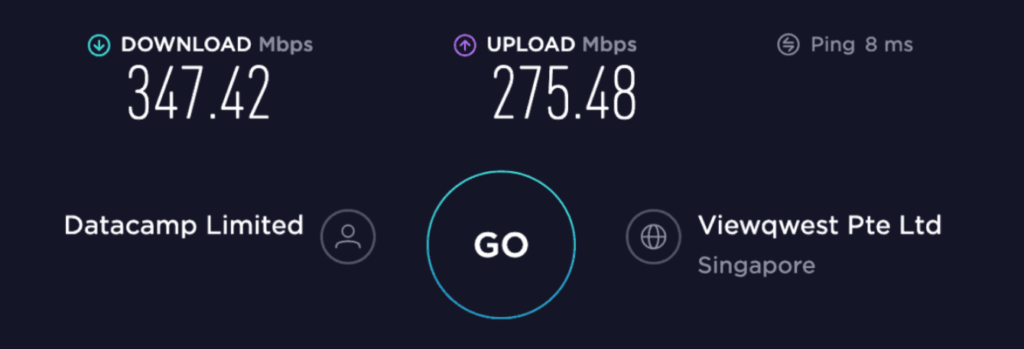
PIA runs WireGuard alongside OpenVPN, and the speeds are strong, particularly on its home turf. In testing, a 250 Mbps baseline held in the 240s on the better servers and stayed in the 190s to 200s on more distant ones, which is good performance with the usual long-distance tax. It is fastest across the United States, where its network is densest, and on nearby connections I have no complaints for streaming, calls, or downloads. Long-haul performance is respectable rather than class-leading, which is the pattern for most providers at this price.
That US strength is worth dwelling on, because it suits a large slice of PIA’s audience. If you live in or frequently connect to the United States, the dense domestic network and the all-states coverage mean you are rarely far from a quick server, and the speed reflects it. The picture is more mixed once you are routing across oceans from, say, Asia or Australia, where the drop is more noticeable and a few rivals hold their speed better. None of it is slow enough to spoil streaming or a video call on a sensible server choice, but if your daily reality is long intercontinental hops rather than domestic connections, it is worth setting expectations accordingly and leaning on a nearby server wherever you can.
On security the fundamentals are all correct. PIA encrypts with AES-256, the kill switch is dependable and seals your traffic if the tunnel drops, and independent testing finds it clean across DNS, IPv6, and WebRTC alike, in line with my own spot checks. The defaults are safe out of the box, and the options to harden things further, stronger encryption, obfuscation, the lot, are there if your situation calls for them. It is a security posture that gives the cautious user everything they need and the demanding user room to push further, which is the balance PIA strikes across the board.
Streaming and torrenting
Streaming is solid without being the headline. PIA opened BBC iPlayer and Netflix’s UK library cleanly in independent testing, and in my own use US Netflix, Disney+, and Amazon Prime Video have all come up, with smart DNS available for the gadgets that cannot run a client. The one structural quirk is that PIA funnels streaming through dedicated servers rather than letting any location do the job, so it is a touch less plug-and-play than a streaming-first service with a labeled server for every channel. It gets there reliably; it just asks you to pick the right server rather than guessing for you.
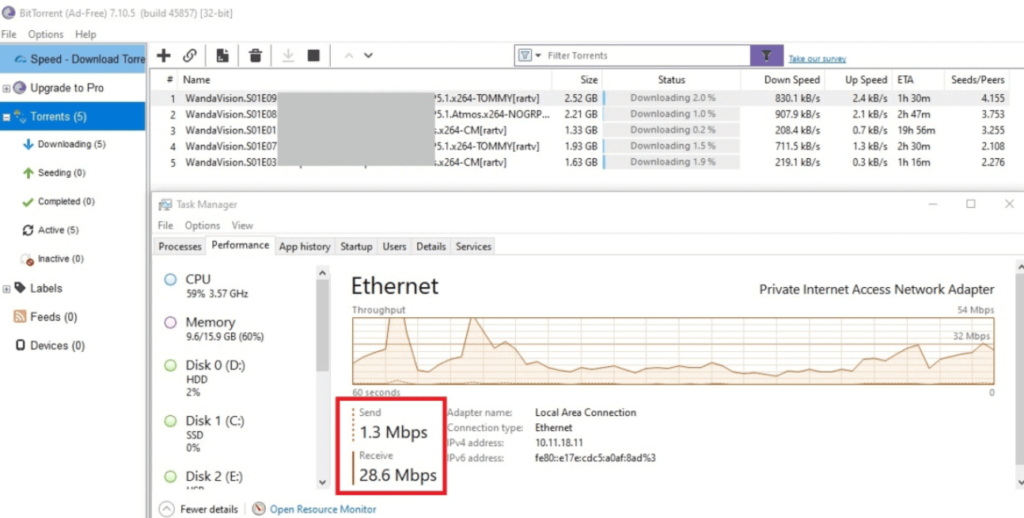
Torrenting is a different story, and a genuine strength. Port forwarding for better peer connectivity, P2P support across the network, a dependable kill switch, the Shadowsocks and SOCKS5 options, and unlimited devices add up to one of the better torrenting setups at any price, never mind this one. The advanced split tunneling lets you keep the torrent client on the VPN while the rest of your traffic runs normally, and the court-tested no-logs policy is exactly the reassurance the activity calls for. It ranks among the leaders on my best VPNs for torrenting list for all of those reasons, and for the downloader who also tinkers, it is close to ideal.
The privacy backing is what really sets the torrenting apart, because downloading is precisely where a no-logs promise has to be genuine instead of cosmetic. This is the same company that was ordered to produce user data in court and had none to give, which is exactly the reassurance you want behind a torrent client, and the open code means the claim is inspectable rather than merely asserted. Add the kill switch standing guard and the obfuscation for networks that frown on P2P, and PIA gives the cautious downloader a foundation most providers cannot match at any price, let alone this one. I leave the kill switch on out of habit regardless, but the groundwork under PIA’s torrenting is about as solid as the category offers.
Server network and unlimited devices
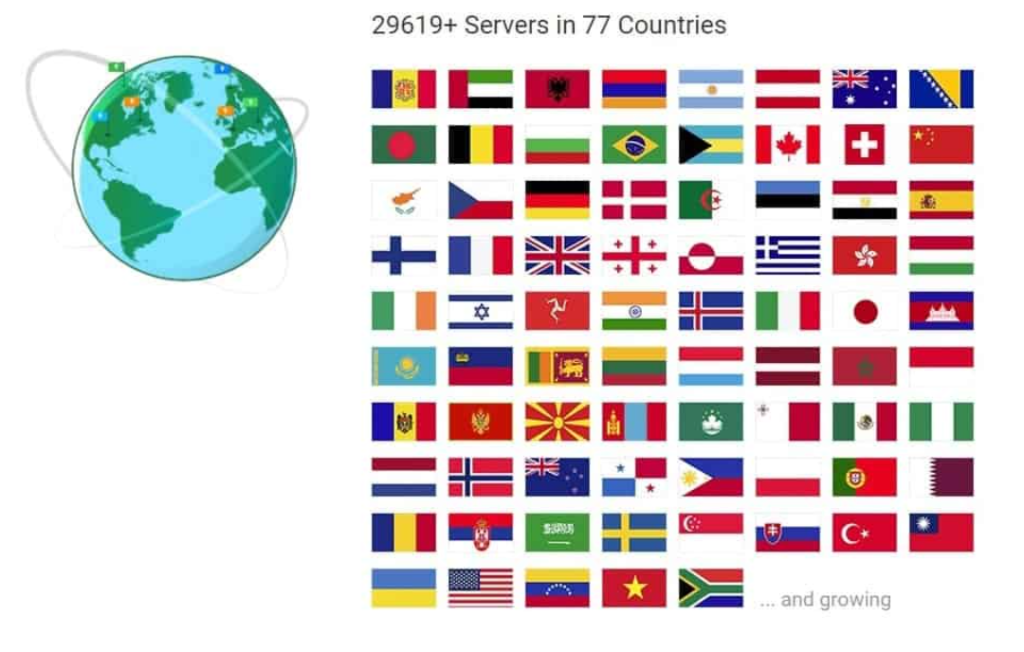
PIA runs one of the broader networks in the business, with servers across more than 90 countries and, unusually, coverage in all 50 United States states, which is genuinely handy if you need to appear in a specific American region for local sport, news, or a regional catalog. That domestic depth is something most rivals do not bother with, and for a US-based audience it is a real practical edge rather than a line on a spec sheet.
The unlimited simultaneous connections are the other headline, and they change how you use the thing. One subscription protects every device in the house at once, with no slot to ration, the same trick that makes Surfshark such good value. Between the two, PIA leans toward control and configurability while Surfshark leans toward simplicity, so the choice between them is really a choice about how much you want to fiddle. For a household of tinkerers, or one tinkerer with a lot of gadgets, PIA covers the lot and lets you tune each connection to taste.
The all-states coverage deserves a second mention because it is genuinely uncommon and useful. Most providers list a handful of US cities and leave it there; PIA lets you appear in any of the fifty states, which matters more than it sounds if you follow a regional sports blackout, want local news from a particular state, or need to access a service that checks your state rather than just your country. It is the sort of niche feature that the broad providers skip and that the people who need it cannot find anywhere else, and it is a good example of PIA building for the user who knows precisely what they want rather than the one who wants to be told.
PIA on restrictive networks
The obfuscation tools are easy to overlook on the feature list and invaluable the moment you need them. A network that blocks plain VPN traffic, a filtered office, a hotel that throttles anything it does not recognise, a country that polices connections, will simply refuse an ordinary tunnel. PIA’s Shadowsocks and SOCKS5 options dress the traffic up as something innocuous, which is frequently what separates a live connection from a dead one. Multi-hop adds a second layer for the same situations, routing you through two points so the path is harder to trace.
Working out of a riad in Marrakech with WiFi that swatted away the first two VPNs I tried, switching PIA over to its obfuscated setup was what got me back online and kept my home banking and email working as normal. The boundary is the same one every provider runs into: the very heaviest state censorship is a harder fight than a hotel router, and I would not promise PIA behind the most aggressive firewalls without testing first. But for the ordinary run of filtered networks that travels throw at you, the obfuscation is a genuine, working tool rather than a checkbox, and having Shadowsocks built in rather than bolted on is more than most rivals offer.
Open-source apps and what that buys you
It is worth dwelling on the open-source point, because it is rarer than the marketing of most VPNs would suggest and it matters more than it sounds. When an app is open-source, its source is published for anyone to read, which means security researchers, journalists, and curious users can check what it does rather than take a sales page at its word. A closed app asks you to trust that it behaves; an open one lets you, or someone you trust, verify it. PIA publishes its apps this way across every platform, which is unusual even among privacy-focused providers.
Stack that on top of the courtroom record and the independent audits and you get a provider whose claims rest on something you can check from three different directions. It does not make PIA infallible, and open code is not a guarantee against every kind of mistake, but it is the opposite of asking for blind faith, and for a privacy tool that posture is the whole game. A company comfortable with you reading its code is, at minimum, a company that expects to survive the reading.
The apps and support
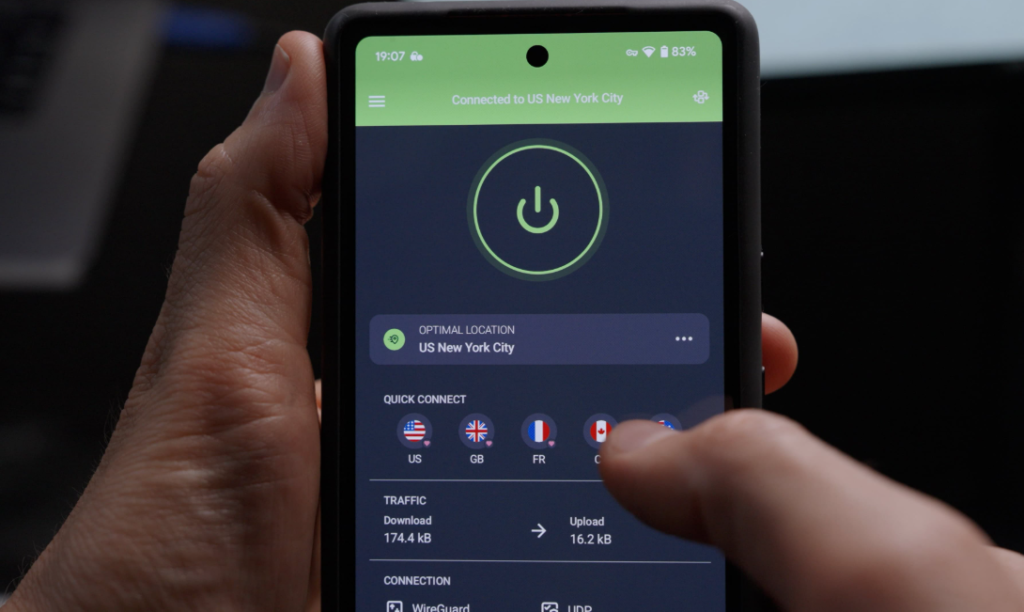
The apps cover Windows, macOS, iOS, Android, and Linux, plus browser extensions, and they are open-source across the board, which is worth valuing twice. The knock is that the interface is denser than the beginner-friendly providers, the natural cost of surfacing all those settings, and the desktop app in particular could use a coat of polish. The flip side is that you can collapse it down to a simple connect button if you would rather not see the controls, so the complexity is opt-in rather than imposed. It is busier than a streaming-first app, but never confusing once you have spent five minutes in it.
The density is really a matter of taste rather than a defect. Someone who wants to set a per-app rule, pick an encryption cipher, and toggle obfuscation sees a control panel that gives them all of it on one screen, which is a delight if that is how you think and a wall of options if it is not. PIA has added a simpler default view to soften the first impression, and the mobile apps in particular feel cleaner than the desktop one, but the underlying philosophy has not changed: this is a VPN that would rather show you the controls than hide them. Whether that reads as power or clutter depends entirely on which kind of user you are, and the review’s recurring point is that PIA knows exactly which kind it is built for.
Support runs through 24/7 live chat that has been quick and competent the times I have used it, backed by a thorough knowledge base for the people who would rather solve things themselves. For a service pitched partly at power users, having real help available at any hour is a sensible safety net, and it has improved alongside the rest of the product. If you are new to VPNs, my VPN setup guide will get you connected before you start exploring the settings.
Setting up PIA
Getting going is quick, whatever your appetite for tinkering. Create an account, grab the app, log in, and hit connect; the defaults protect you without a single change. When you want to tune things, the first stops are the kill switch and MACE, both close to hand, and the protocol picker, where WireGuard gives the best speed. Torrenters will want to turn on port forwarding; travelers headed somewhere restrictive should enable the obfuscation. With unlimited connections there is no reason to leave anything uncovered, so put it on every device, and for a television with no client of its own, smart DNS or a router fills the gap. The depth is all optional, so start simple and grow into it.
PIA pricing and plans

PIA is one of the cheapest VPNs worth recommending, full stop. The long multi-year plan drops to around $2 a month or less, with unlimited devices included rather than sold as an upgrade. There is an optional bundle that adds antivirus and a dedicated IP for anyone who wants them, though the VPN by itself needs none of it, and the monthly option carries the usual short-term markup. A 30-day money-back guarantee covers every plan, with payment by card, PayPal, or crypto. For the feature depth on offer, the price is genuinely hard to match, and it lands an easy place on my cheapest VPNs list.
| Key facts | Private Internet Access |
|---|---|
| Price | From about $2/mo or less (multi-year) |
| Money-back guarantee | 30 days |
| Simultaneous devices | Unlimited |
| Servers | 90+ countries, all 50 US states (company figure) |
| Jurisdiction | United States (Kape Technologies) |
| Protocols | WireGuard, OpenVPN |
| Encryption | AES-256 |
| Logging | No-logs, court-tested and independently audited; open-source apps |
| Streaming | Netflix, BBC iPlayer, Disney+, Prime Video (dedicated servers) |
Every plan carries a 30-day refund window.
What is new for 2026
PIA has spent recent years sanding down the things that used to count against it. The headline change is the move to unlimited simultaneous connections, where it once capped you at ten, which turned it into one of the better-value picks for a household. WireGuard has settled in alongside OpenVPN to lift the everyday speeds, the no-logs policy has kept collecting independent audits to stand beside the courtroom record, and the apps have continued their slow march toward something a newcomer can love rather than just tolerate. The interface still trails the streaming-first names on polish, which is the one place the work is not finished, but the direction is clearly the right one. None of it changes what PIA fundamentally is, a deep, cheap, provable privacy tool, but it has steadily closed the gaps that once made it a harder sell to anyone but the enthusiasts.
How PIA compares
Against the polished all-rounders, PIA trades a little ease for a lot of control and proof. NordVPN is faster and slicker and stronger in China, and the better pick if you want one VPN that just works without fiddling. Surfshark matches the unlimited devices and the low price with a friendlier app, so if simplicity is your priority over configurability, it is the easier buy. ProtonVPN is the name to weigh if a Swiss base with no surveillance-alliance ties is your hard requirement, since that is the one thing PIA cannot offer. What PIA gives you that none of them quite matches is the combination of courtroom-proven privacy, open-source code, deep control, and a rock-bottom price, which is a specific bundle that a specific buyer will value above all the polish in the world. The way to choose is to ask what you want from a VPN: if the answer is “it just works, simply,” one of the others wins, but if the answer is “I want to control it and verify it, cheaply,” nothing here gets closer than PIA, and the gap is not small.
Reliability and the honest limits
The drawbacks are the ones flagged throughout, pulled together here so they are easy to weigh side by side. The United States jurisdiction is the headline concern for the privacy-minded, and while the court record is the strongest possible answer to it, plenty of buyers will still prefer an offshore base on principle, which is fair. The Kape ownership compounds that for anyone who tracks corporate lineage. And the interface, busier than the beginner-first crowd, is a real if minor friction for someone who just wants to press connect and forget it.
Set against those is a genuinely deep, genuinely cheap, genuinely verified service: courtroom proof, open code, unlimited devices, and a control panel that respects a power user’s curiosity. None of the limits sink PIA for the tinkerer or torrenter it is built around, or it would not rank where it does in my recommendations. But pretending the jurisdiction question away would be a disservice, and the 30-day guarantee lets you put each of these claims to your own test before you commit a cent.
PIA FAQ
Is Private Internet Access trustworthy?
Its no-logs policy is among the most trustworthy in the industry, because it has been tested in court, where PIA was unable to produce user data it does not keep. The apps are also open-source and the policy has been independently audited. The caveats are its US base and its Kape ownership, which are worth weighing if jurisdiction matters to you.
Does PIA keep logs?
No, and this is the rare case backed by courtroom evidence rather than a promise alone. In legal proceedings PIA has been compelled to hand over user data and had none to give, more than once, and its open-source apps and independent audits support the claim from other angles.
How many devices can I use with PIA?
As many as you want at once. PIA allows unlimited simultaneous connections on a single account, which makes it strong value for households and anyone with a lot of devices to cover, and you can spread them across desktops, phones, routers, and browser extensions.
Is PIA good for torrenting?
It is one of the best. Port forwarding, P2P across the network, a dependable kill switch, Shadowsocks and SOCKS5 options, unlimited devices, and a court-tested no-logs policy add up to a torrenting setup that is hard to beat at this price.
Are PIA’s apps really open-source?
Yes, across every platform. That means the code is published for anyone to inspect, so researchers and users can verify what the app does rather than take it on trust. It is a rare and genuinely valuable feature, even among privacy-focused VPNs.
Is PIA good for beginners?
It can be, but it is built for people who like options. The app has more settings on show than the simplest providers, though you can collapse it to a single connect button. If you want the gentlest possible first VPN, CyberGhost is easier; if you want room to grow, PIA rewards it.
Does PIA’s US base undermine its privacy?
It is a fair concern, since the US is part of the 14 Eyes alliance. The strongest counter is the court record: a company that genuinely keeps no logs has nothing to hand over regardless of jurisdiction, and PIA has proven exactly that in legal proceedings. If you still want an offshore base on principle, ProtonVPN is the better fit.
Does PIA work with Netflix?
Yes, through its dedicated streaming servers. Independent testing unblocked Netflix‘s UK library and BBC iPlayer, and US Netflix, Disney+, and Prime Video have worked in my use, with a smart-DNS option for devices that cannot run the app. It is reliable, just less plug-and-play than a streaming-first VPN.
Does PIA have an ad blocker?
Yes, called MACE. It blocks ads, trackers, and malware domains at the DNS level, which trims clutter from pages and cuts a little data use on mobile. You switch it on in the settings and forget it; it works across apps rather than only in the browser.
Does PIA support port forwarding?
Yes, which is part of why it is so well regarded for torrenting. Port forwarding improves your connectivity to peers, so downloads find more sources and run faster. It is a feature several bigger names have dropped, so its presence here is a real plus for downloaders.
Does PIA work in restrictive countries?
It has a real chance, thanks to built-in obfuscation through Shadowsocks and a SOCKS5 proxy that disguise VPN traffic on networks that block it. It handles ordinary filtered networks well; the very heaviest state censorship is harder, so set it up and confirm it connects from home before you rely on it.
Is PIA good value?
Exceptional, for what it includes. At around $2 a month or less on the long plan, with unlimited devices, court-tested privacy, open-source apps, and a deep feature set, very little else gives you this much for the money. Just take the long term, since the monthly rate is far higher.
Verdict: who should buy PIA
Buy Private Internet Access if you want provable privacy, deep control, and unlimited devices at a rock-bottom price. It is the pick for tinkerers, torrenters, and anyone who values a no-logs policy that has survived a courtroom over one that has only survived a marketing meeting. The open-source apps, the granular settings, and the all-50-states coverage round out a package that rewards the curious and costs almost nothing.
Two kinds of buyer should pass: anyone who wants a Swiss base free of surveillance-alliance ties, where ProtonVPN fits better, and anyone who wants the simplest possible app with no settings to ignore, where a streaming-first name is the gentler choice. For control and proof on a budget, though, PIA stands nearly alone, and you can see how it ranks against the field on my best VPNs of 2026.
This is the one I would hand to the friend who reads the fine print and enjoys it. Grab it on the long plan, dig into the settings as deep as you like or ignore them entirely, and lean on the 30-day guarantee if it turns out not to suit how you work. Either way you are testing a service that has done the rare thing of proving its central claim under real, adversarial pressure rather than in a planned exam, which is more than almost any of the polished alternatives can say for themselves. For the right buyer, the combination of evidence and control it offers is genuinely hard to find anywhere else, and harder still to find at a price this low without something important being cut to get there, which is exactly the trap PIA has, against the odds, managed to avoid.
30-day money-back guarantee, cancel anytime.
Leave a Reply
You must be logged in to post a comment.